Volume II: The Echoes of East Troy
The Quarterline Connection
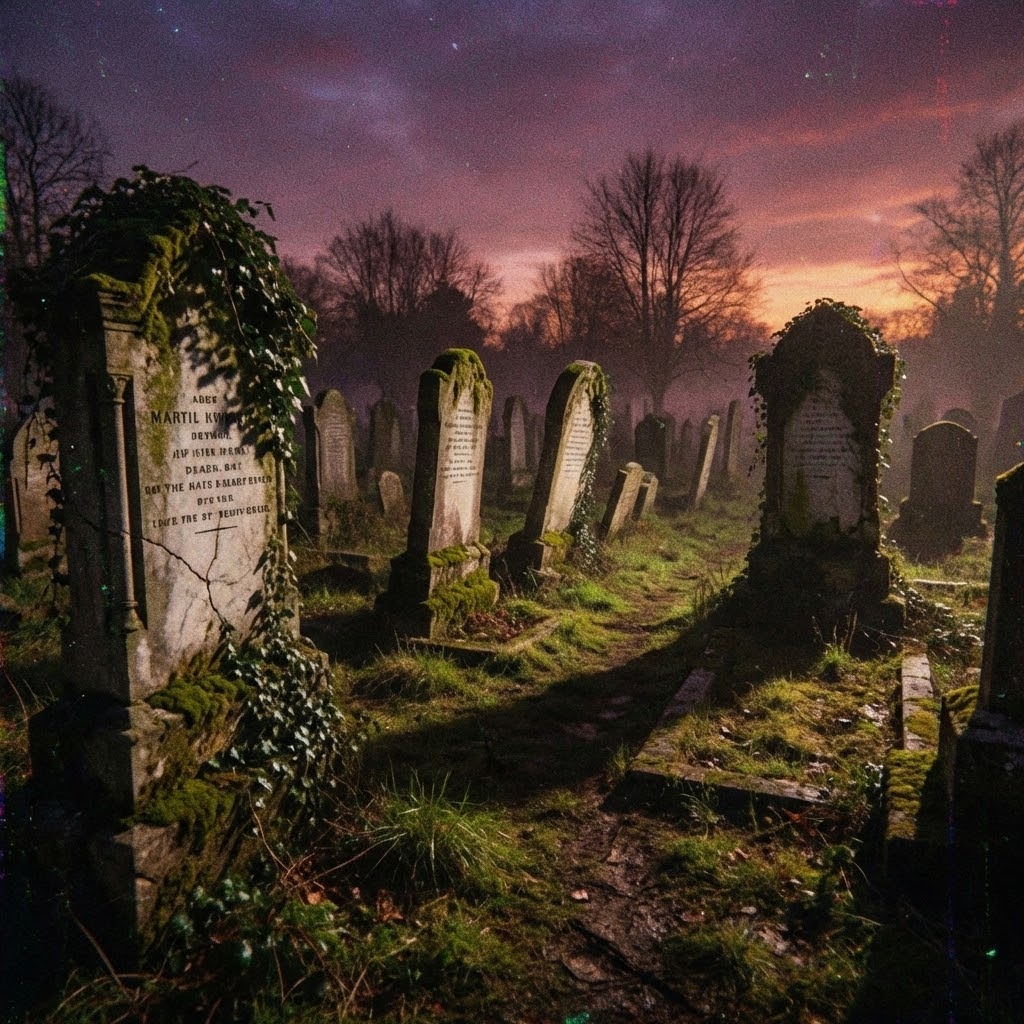
While the Streich family was establishing their roots in Jefferson County, another story was unfolding in the quiet corners of Walworth County. The Quarterline Cemetery, also known as Evergreen Cemetery in Troy Center, holds the silent testimony of this history. It is here that Thomas Morrow (1810-1866) rests, his grave a physical anchor to a past we are still uncovering. This burial ground is significant not just for who lies there, but for who lies beside them.
Technical Div.
Weathered markers at Quarterline Cemetery (also known as Evergreen), Troy Center.
The Silent Testimony
A Community of Pioneers
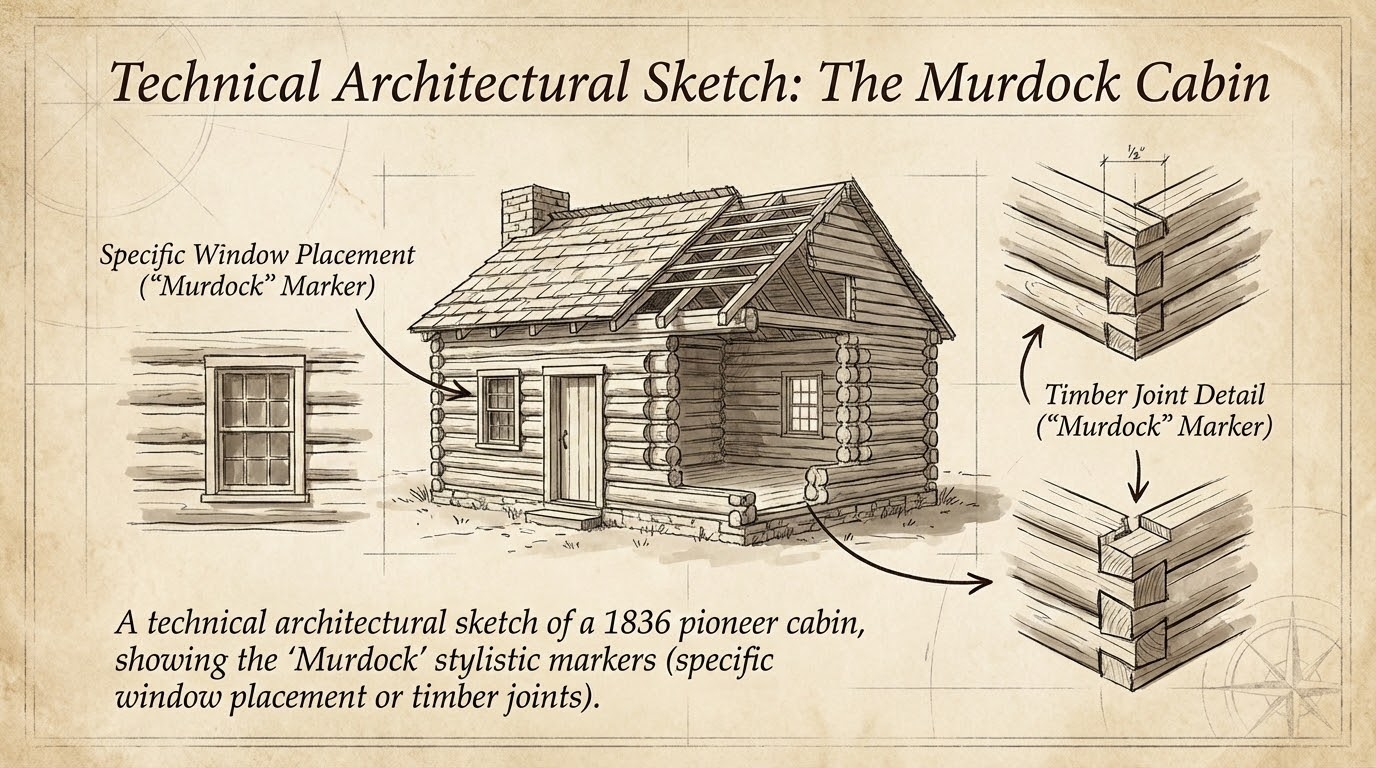
Sharing this sacred ground with Thomas Morrow are Samuel L. and Faye M. Murdock. The Murdocks were among the earliest settlers of East Troy, arriving in 1836 when the land was still wild frontier. The proximity of the Morrow and Murdock plots is no coincidence; it speaks to a deep community bond, likely forged through shared struggles, faith, and perhaps even marriage. The crop labels suggesting a 'Morrow-Murdock' connection find their strongest physical evidence here in the earth of Quarterline Cemetery.
Technical Div.
A technical reconstruction of the 1836 pioneer cabin architecture used by the early settlers of East Troy.
The Murdock Homestead
The Lackey Enigma
The name 'Streich' is well-documented, but the maternal lines often fade into history's background. Mary Lackey Morrow (1844-1892) represents one such mystery. The name 'Lackey' hints at Irish or potentially English origins, a stark contrast to the German roots of the Streichs. Searches for her lineage intertwine with the Murdocks, suggesting she may have been the bridge between these families. Was she a Murdock by blood, or did a Lackey marry into the clan? Her story is the key to understanding how these distinct family trees eventually grafted together.
Technical Div.
A faded archival reconstruction representing the mysterious lineage of Mary Lackey Morrow.
The Lackey Enigma
Convergence
History is rarely a straight line; it is a convergence of paths. The German Streichs, laboring in the fields of Farmington and Aztalan, and the pioneer families of East Troy, seem worlds apart in 1880. Yet, the movement of people—driven by marriage, land, and opportunity—would eventually bring them together. Volume II closes not with a definitive answer, but with the realization that the 'Streich Family Album' is a tapestry of many names: Streich, Morrow, Murdock, and Lackey, all woven together in the American Midwest.